
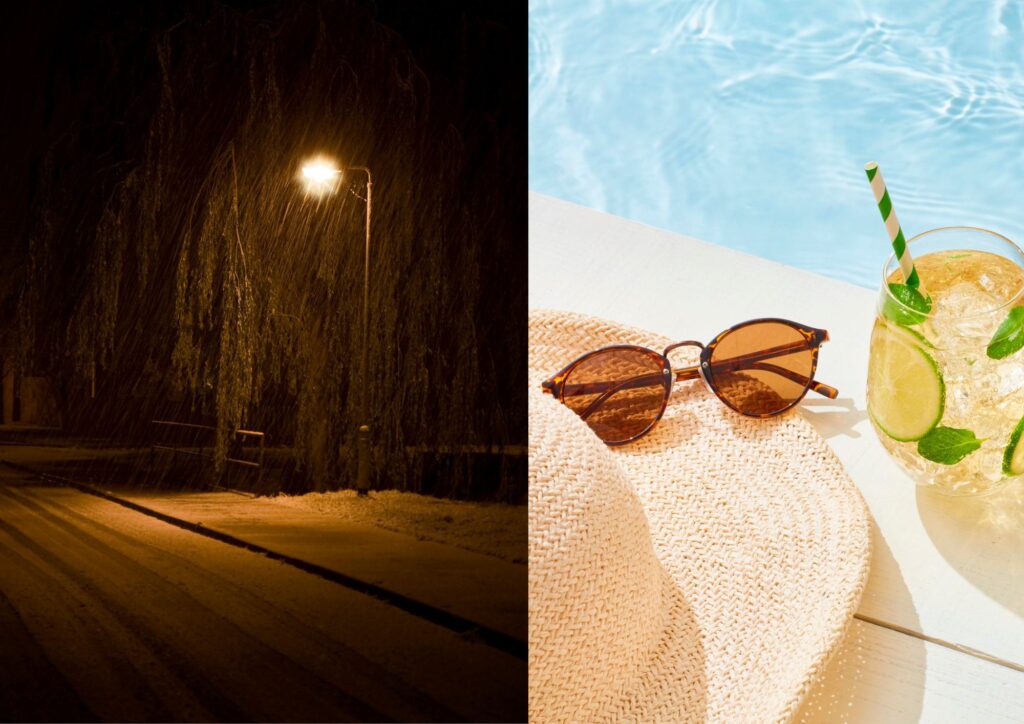
Living between hemispheres does something strange to your sense of seasons. I haven’t been back to European winter for almost a decade — every trip home has been in summer. But going from New Zealand’s winter straight into Europe’s heat, sunlight, and long evenings gives me so much energy that returning to NZ feels like dropping into hibernation. That contrast alone made me realise how deeply weather and seasons shape our mood, our routines, and even our identity.
One thing I love about living in NZ is the ability to escape a season. If winter feels too damp and miserable, you can fly to Australia or Fiji and suddenly you’re in sunshine again. If summer feels too hot, you can escape to somewhere cooler. Knowing that “better weather” is only a few hours away gives you a strange sense of freedom.
Sunlight, Vitamin D, and the Winter Mood Shift
Seasonal Affective Disorder — SAD — is often dismissed as being “too sensitive to weather,” but sunlight genuinely affects our biology. It regulates circadian rhythm, serotonin, and vitamin D. Many people don’t know they need vitamin D supplements in winter, or that deficiency can make them tired, foggy, or low.
I once had a coworker tell me I was “too influenced by weather,” as if it was a personal flaw. But it’s not just me — many people feel the same, even if they don’t have a name for it.
When sunset hits at 4:30pm, I could happily be asleep by 8pm. Winter makes us hibernate. Summer, on the other hand, keeps you awake with the sheer force of light — you feel energised, capable, almost unstoppable.
I remember watching a documentary about Alaska as a kid. During the endless summer daylight, newcomers would stay awake for days, buzzing with energy, until they finally crashed for 24 hours. And in winter, when the sun didn’t rise at all, people used special lamps to fight depression. Friends who studied in Finland and Sweden told me the same: winter can be brutally dark, and it changes how you feel.
Meanwhile, countries near the Equator barely experience seasonal change. My husband grew up in South India, where sunrise was always around 6am and sunset around 6pm — for 21 years straight. The idea that daylight hours could shift so dramatically was completely new to him.
Extreme Heat: The Other Side of Seasonal Struggle
Cold and darkness affect us — but so does heat. When the thermometer hits 40°C, nobody is functioning at their best. You need more water, more rest, and more patience.
During our recent trip to Hungary, I finally understood siesta culture. Our son’s nap time conveniently fell during the hottest hours, so we’d retreat indoors, close the shutters, and wait for the world to cool down. You simply cannot work outside in that kind of heat. It’s not laziness — it’s survival.
And yes, extreme heat affects mood too. Hot, humid weather can make you short-tempered, sluggish, or irritable. Just like winter can make you quiet, introspective, or low-energy.
How Climate Shapes National Personality
Climate doesn’t just influence mood — it shapes entire cultures.
Countries with long, dark winters often develop quieter, more introspective social norms. In Scandinavia, people retreat indoors for months, and socialising becomes intentional rather than spontaneous. Silence isn’t awkward; it’s normal. Life slows down because nature slows down.
Mediterranean cultures, on the other hand, are built around heat. Late dinners, long evenings outside, loud conversations, and a kind of collective resilience to discomfort. When the sun doesn’t set until 10pm, people simply stay awake longer. Life stretches.
Then there’s India, where my husband grew up. With sunrise and sunset almost fixed at 6am and 6pm year-round, the rhythm of life is incredibly stable. There’s no winter hibernation or summer explosion — just consistency.
New Zealand sits somewhere in between. Summers feel Mediterranean — social, outdoorsy, full of movement. Winters feel Scandinavian — quiet, early, inward. People disappear into their homes, and the streets empty by 6pm.
Climate doesn’t just affect how people feel; it affects how societies behave.
Parenting Through Seasons
Parenting changes your relationship with weather completely. Before having a child, you might tolerate cold, rain, or heat. With a toddler, weather becomes a daily logistical puzzle.
In summer, parenting feels expansive. You can go to the beach, playgrounds, parks, pools. You can leave the house without packing layers, blankets, or emergency snacks. Even a simple walk becomes an adventure. Kids thrive in sunlight — they sleep better, eat better, and burn off energy naturally.
Winter is a different story. You suddenly need indoor plans, backup plans, and backup plans for your backup plans. Rain can cancel a whole day. Cold houses (hello, NZ insulation issues) mean you’re constantly adjusting heaters, layers, and bedtime routines. Toddlers get restless faster, and you feel the pressure to “do something” even when the weather says otherwise.
I’ve noticed that my son’s mood shifts with the seasons too. In summer he’s curious, energetic, and social. In winter he becomes more clingy, more home-oriented, more sensitive to changes.
Parenting forces you to adapt to the season you’re in — not just emotionally, but practically.
Seasonal Rituals That Keep You Grounded
Rituals are how we survive seasons — especially the hard ones.
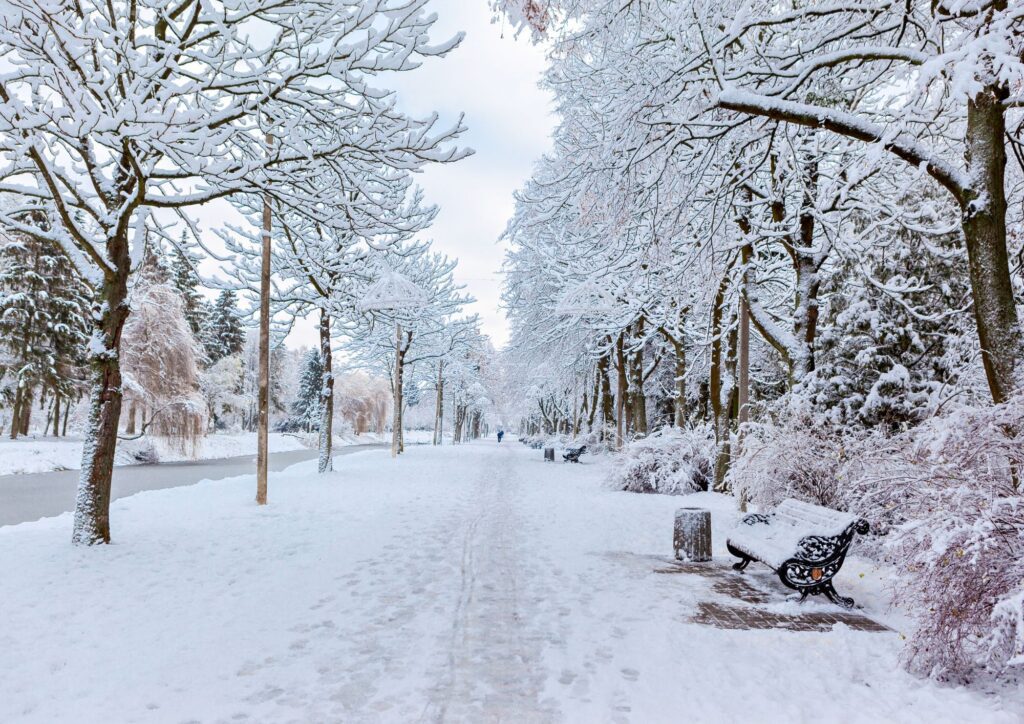
Growing up in Hungary, winter rituals were part of life. Staying outside in the cold, then retreating into warmth. Our extensive bath culture — natural mineral waters, saunas, steam rooms — made winter feel almost luxurious. My favourite ritual was going to Normafa: walking through untouched snow, listening to the silence of the forest, then warming up in a spa and finishing with a movie.
Summer rituals were different: meeting friends after work and walking along the Danube, enjoying the long evenings and warm air.
In New Zealand, rituals have changed again. Summer rituals are easy: evening walks with my son, beach days, long weekends, spontaneous meetups. Winter rituals require more effort: warm drinks, early dinners, indoor play, and accepting that some days are simply meant for staying home. And now, as parents, our rituals revolve around our son’s rhythm too.
Rituals give seasons shape. They turn weather from something that happens to you into something you participate in.
The NZ Insulation Problem: Cold Outside, Cold Inside
One of the biggest shocks moving to New Zealand was discovering that winter cold follows you indoors.
Yes, Hungary gets colder outside — but inside, homes are warm. Thick brick walls, radiators, insulation… you don’t wear a coat at home.
In NZ, it’s the opposite. I’ve been to job interviews where employees wore jackets inside the office. I’ve been to dinner parties where we kept our winter coats on because the house was freezing. Before we used a heater at night, our home dropped to around 13°C.
And when you complain, people say: “Are you not from Europe? Isn’t it colder there?”
Yes — outside. But inside, we’re warm.

Walking with my husband in winter is another funny contrast. He’s in shorts with a jumper (maybe a jacket if it’s really cold). Meanwhile I’m in long pants, boots, and my winter coat. He’s from South India; I’m from Europe. Sometimes I joke that he’s warm‑blooded and I’m cold‑blooded.
But really, it’s just what your body is used to.
Living Between Hemispheres
Living between hemispheres is like living two lives. You experience seasons out of sync with the rest of the world. While Europe is covered in snow, you’re at the beach. While NZ is hibernating, Europe is exploding with summer festivals.
It creates a strange emotional whiplash.
When you fly from NZ winter into European summer, your whole body wakes up. You suddenly remember what long evenings feel like, what warmth feels like, what social life feels like. You feel alive in a way you forgot you could.
And when you return, you feel the contrast sharply. The early sunsets, the quiet streets, the cold houses — it hits harder because you’ve just lived the opposite.
I used to be a winter kid — born in late January, loving the cold, the snow, the silence. Now, in New Zealand, I’m a summer kid. My birthday falls in warm weather, close to a public holiday, and I can celebrate outdoors. It’s a completely different experience, and it has changed how I relate to my own season.
Living between hemispheres teaches you that seasons aren’t just weather — they’re a way of life. They shape your energy, your identity, your rituals, and your memories.
What About You?
I’m curious — what’s your favourite season, and why? Do you feel different depending on the weather, or do you thrive no matter what the sky is doing?