
Comparison is the quiet ache we carry without noticing. It slips into our thoughts when we scroll, when we see other parents, when someone shares a win, when life feels heavy. It’s subtle, emotional, and often invisible — but it shapes how we see ourselves, how we move through the world, and how we measure our worth.
In many ways, comparison is the engine behind burnout, self‑doubt, and that constant feeling of “I should be doing more.” But comparison isn’t just a villain. It’s also a mirror, a motivator, and sometimes a wake‑up call. The trick is learning how to use it without letting it use you.
Why We Compare
Humans compare because it’s built into us. It’s how we assess safety, belonging, identity, and direction.
We compare:
- careers
- motherhood
- productivity
- homes
- bodies
- lifestyles
- how well we’re coping
- our pace to someone else’s
Comparison is emotional because it touches identity. It’s relatable because everyone does it. And it’s Pinterest‑friendly because it’s universal.
The Social Media Distortion: The Thief of Happiness
We scroll through Instagram, TikTok, Facebook — and suddenly our life feels small.

Someone has the partner we want. Someone has the home we dream of. Someone has the career we wish we had. Someone who was “a nobody” in school is now thriving.
And we think: Why not me? What did I do wrong? Why is my life not like that?
But we’re comparing our behind‑the‑scenes to someone else’s highlight reel.
We don’t see:
- the arguments before the video
- the exhaustion after the photo
- the parts of their life quietly falling apart
- the areas where they’re struggling just as much as we are
People rarely show the bad side of the coin. Not because they’re fake — but because humans curate.
Comparison hurts because it’s incomplete.
A Personal Micro‑Story: When Comparison Hits Hard
When I used to go to mum groups, some of the mums looked so put together. Strong women. The kind who could take their kids anywhere — an hour‑long car ride, a ferry trip, a whole day out — without any help.
Meanwhile, I was struggling.
Part of it was physical: I had injuries, I wasn’t supposed to drive or carry things, and everything felt harder than it should have. But part of it was emotional too. I found it difficult to take my son anywhere longer than 20 minutes in the car. I felt like I had to prepare so much just to leave the house.
And I remember thinking: What is wrong with me? How can they be so strong and I so weak?
Or when parents could cook and clean while their toddlers played independently — mine wanted to be right next to me, watching what I was doing, needing closeness. Not wrong, not bad… just different. But in those moments, comparison made me feel like I was failing.
This is how comparison sneaks in: quietly, subtly, in the everyday moments where we already feel stretched thin.

The Hidden Side of Success
These days, I try to look behind the surface.
If someone is successful, maybe it’s because they put effort into it. Maybe it’s luck. Maybe it’s timing. Maybe it’s privilege. Maybe it’s persistence.
And maybe — this is the uncomfortable part — we don’t want to admit our own patterns.
If you scroll endlessly, binge‑watch shows, and do an average job, it’s not surprising that you don’t end up with a multimillion‑dollar business. Not in a shameful way — just in a realistic way.
Comparison can be a mirror that shows what we’re not doing yet. It can also be a spark: If she could do it, maybe I can too.
Most successful people aren’t geniuses. They’re ordinary people who kept going.
Why Grades Don’t Predict Life
I once read research about whether straight‑A students become successful CEOs or entrepreneurs. The answer was often: no.
High achievers tend to become excellent employees — not risk‑takers. They learn obedience, not experimentation. They learn perfection, not creativity.
People with average grades often do better later because they had to learn:
- improvisation
- problem‑solving
- navigating uncertainty
- “bullshitting” their way through challenges (which is honestly a life skill)
My own story fits this perfectly.
I was a straight‑A student because my pocket money depended on it. I didn’t study out of curiosity — I studied out of pressure. So I didn’t discover what I loved. I discovered how to perform.
Comparison starts early. And it shapes identity more than we realise.
Signs You’re in Unhealthy Comparison Mode
These are the moments where comparison becomes heavy instead of helpful:
- You feel “behind” for no clear reason
- You lose motivation instead of gaining it
- You feel smaller after scrolling
- You obsessively check someone’s updates
- You start thinking in “shoulds” instead of desires
- You feel guilty for not being like someone else
- You judge your parenting, body, home, or pace harshly
- You feel like your life is wrong instead of different
If you recognise these, you’re not alone. This is where comparison becomes emotional instead of informational.
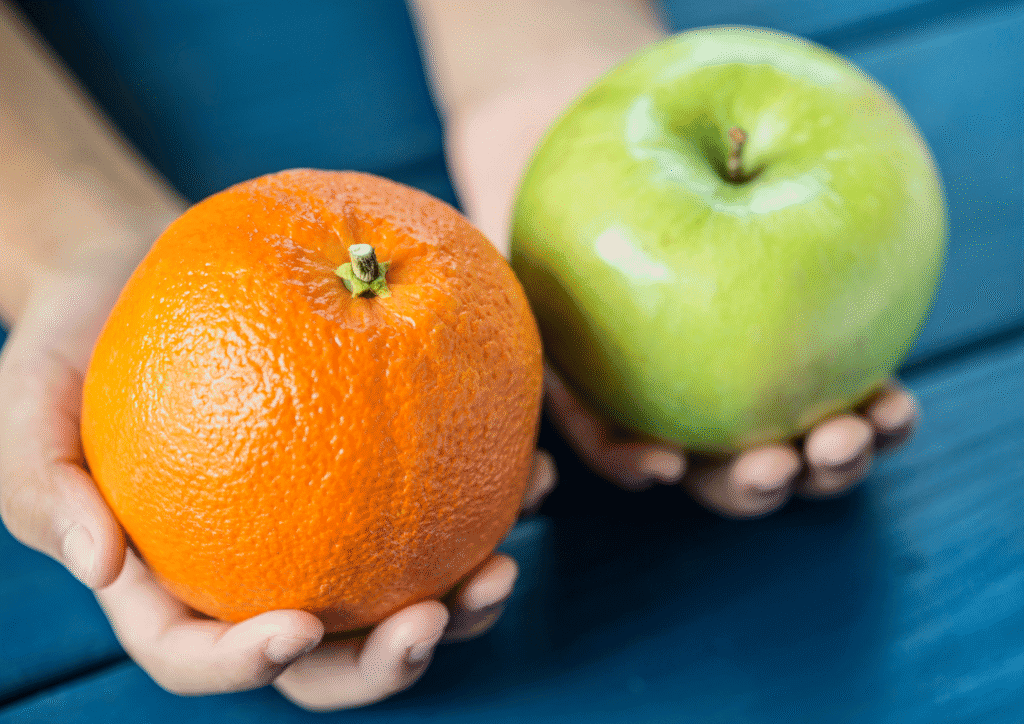
How to Shift Out of Comparison
Here’s how to gently move out of the spiral:
1. Identify the trigger
Was it a photo? A mum at the playground? A career announcement? A holiday post?
Naming it reduces its power.
2. Ask: “What is this showing me about what I want?”
Jealousy is often desire in disguise. It’s pointing to something meaningful.
3. Turn comparison into curiosity
Instead of “Why her?” Try “What part of her life inspires me?”
4. Set personal metrics
Not “Do I have what she has?” But “Am I moving toward what matters to me?”
5. Reduce exposure to triggers
Not a detox — just awareness. If certain accounts make you feel small, mute them.
6. Create a direction list
Not a “should list.” A list of things that genuinely excite you.
Comparison becomes healthy when it becomes directional, not emotional.
A Gentle Closing
Comparison will always exist. It’s part of being human.

But you get to choose:
- whether it drains you
- whether it motivates you
- whether it distorts your reality
- whether it reveals your desires
- whether it becomes a weapon
- or a compass
Your life isn’t late. It’s unfolding. And you’re allowed to grow at your own pace — even if the internet grows faster.
If comparison has been weighing on you lately, you might also like my post on the rat race — a deeper look at burnout, survival mode, and why modern life feels so heavy. Escaping the Rat Race: Why Modern Work Feels Like Survival