
Over the years, I’ve noticed a pattern in almost every job I’ve had. It’s almost like a life cycle — predictable, emotional, and strangely universal. No matter the company, the industry, or the role, the same stages seem to repeat themselves. Maybe you’ve felt them too.
Stage 1: The Honeymoon Period
This is the magical beginning. Everything feels fresh and full of possibility. You walk in with energy, ideas, and optimism. You think, “This time it will be different. This time I’ll finally get to do things right.”
Your new manager seems open to your suggestions. Your coworkers seem like they might become friends. You’re convinced you can change the world — or at least change the team.
For me, this phase usually lasts about six months. During that time, I’m full of enthusiasm, creativity, and hope.
Stage 2: When Reality Starts to Sink In
Then the fog lifts.
The pink clouds fade, the Disney birds fly away, and you start to see the cracks. The problems you thought you left behind at your old job? They’re gone, yes — but now you’ve inherited a whole new set of issues.
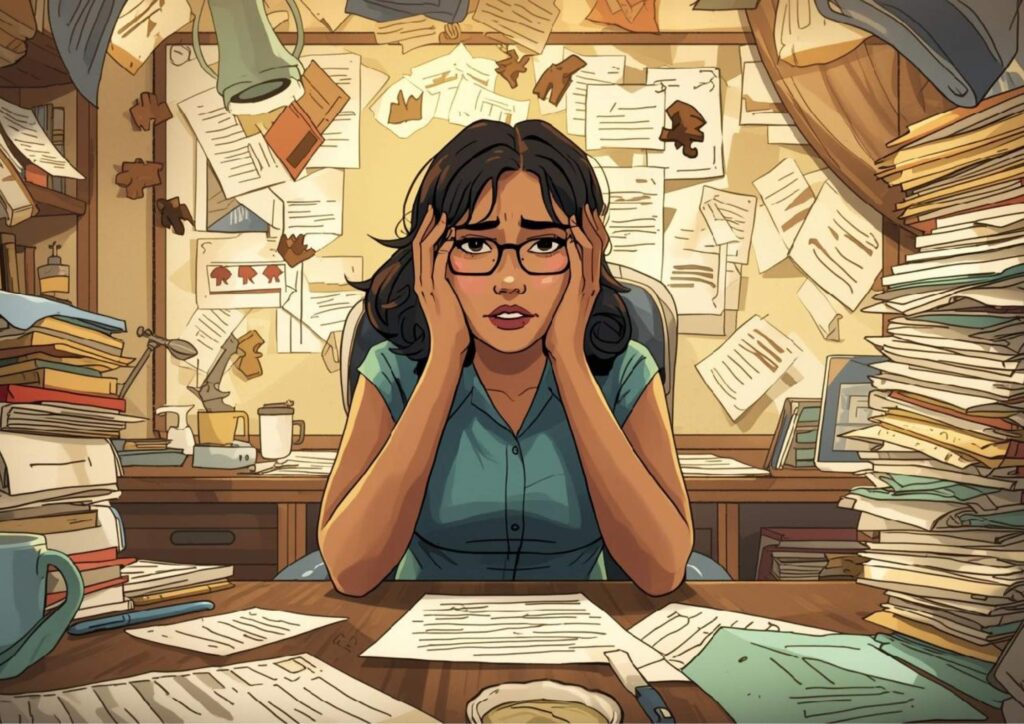
Your brilliant ideas? No one implemented them. Your energy? Lower every week. The excitement? Slowly replaced by a familiar heaviness.
I remember one job where we had an employee satisfaction survey during my honeymoon phase. I gave everything an 8 or 9 out of 10. A year later, answering the exact same questions, I don’t think I rated anything above a 5. The year after that, I didn’t even want to fill it out. They always say it’s anonymous, but when your “team” is just you and your manager, it doesn’t take a detective to figure out who said what.
Stage 3: The Fed‑Up Phase
Eventually, you hit the wall.
This is the point where you know you can’t keep going like this. You need a new environment, new energy, new possibilities. You start browsing job boards “just to see what’s out there,” but you already know what’s happening.
For me, this usually hits around the 2‑year mark. My patience runs out, my motivation drops, and I start planning my exit. The longest I’ve ever stayed anywhere was about 3 to 4 years. I still don’t fully understand how some people stay in the same place for a decade or more.
Stage 4: The Exit — or Acceptance
Some people leave. Some people stay and adapt. Some people emotionally check out but physically remain. Everyone handles this stage differently.
I once read that the best time to leave a job is when you’re still happy. But honestly — when is that? During the honeymoon period? You can’t switch jobs every six months. And by the time you realise you’re unhappy, you’re usually already deep into the fed‑up stage.
How to Survive the Work Life Cycle (A Totally Serious Guide)
After repeating this cycle more times than I’d like to admit, I’ve picked up a few survival strategies. They’re not perfect, but they’ve kept me sane — or at least functional.
1. Pace your enthusiasm
Don’t use all your energy in the first month trying to fix everything. You’re not a corporate superhero. You’re a human with a coffee dependency.
2. Lower your expectations just enough
Not to the point of nihilism — just enough so you’re not shocked when the “open to ideas” boss is actually “open to ideas that require zero effort.”
3. Find your people
Every workplace has at least two:
- the one who knows the gossip
- the one who knows how to fix the printer
Befriend both. They are your emotional support animals.
4. Protect your energy like it’s a rare Pokémon
Your enthusiasm is a limited resource. Spend it wisely. Preferably not all on the first week’s onboarding tasks.
5. Keep your CV updated
Not because you’re leaving tomorrow — but because it feels good to know you could. It’s the adult version of keeping your passport ready in case you need to flee the country.
6. Accept that not every job is forever
Some roles are stepping stones. Some are detours. Some are cautionary tales. All of them teach you something — even if that “something” is what you never want again.
7. Know when it’s time to go
If you’re fantasising about quitting during meetings, that’s a sign. If you’re Googling “how to disappear,” that’s a bigger sign.
So Why Does This Cycle Happen?
I don’t have a perfect answer, but I have theories:
- We start with unrealistic expectations — of ourselves, of the company, of the role.
- Most workplaces look shiny from the outside but messy from the inside.
- Leadership often promises more than they can deliver.
- And maybe some of us simply outgrow environments faster than others.
Maybe the cycle isn’t a flaw. Maybe it’s just how some people evolve.
What I’ve Learned
Over time, I’ve learned to recognise the signs earlier, to stop blaming myself for wanting change, and to seek out workplaces that value honesty over empty promises. I’ve also realised that some people thrive in stability, while others thrive in movement.
Neither is wrong — they’re just different paths. The real question is: which one feels like yours
If you want to read more about urgency culture and invisible work, here’s my post about “working for the drawer”.