
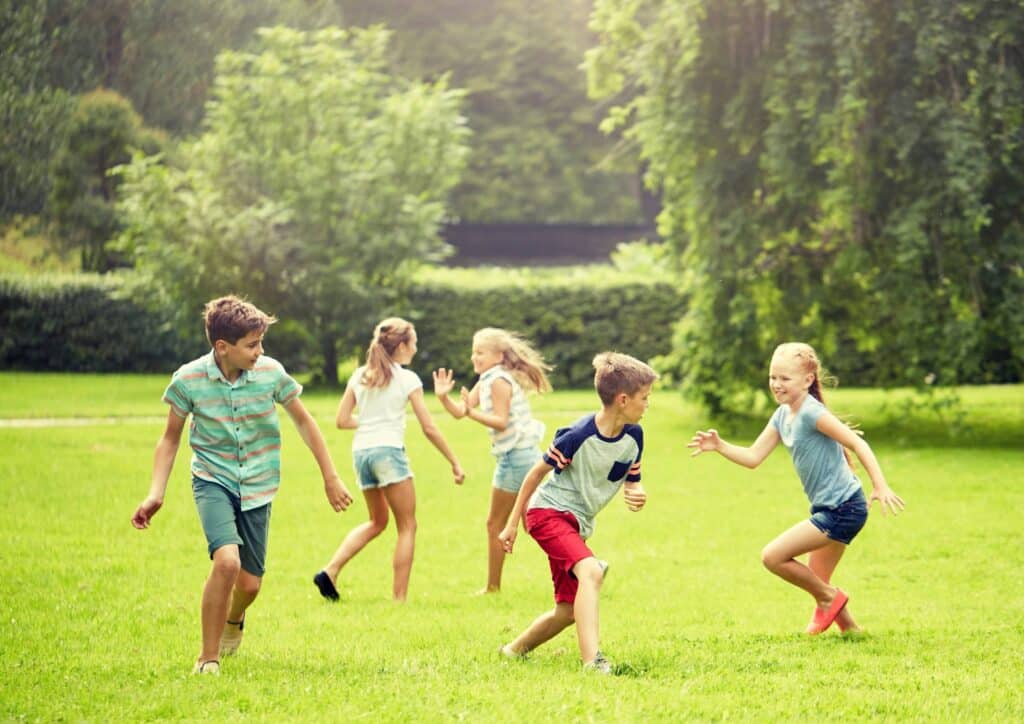
Photo by Syda Productions via Canva
Last time, we met The Loud Ones — neighbours who treat volume like a lifestyle, not a choice.. This week, we follow them through the fence portal and into the garden they’ve unofficially claimed. Welcome to The Kid Invasion — where fruit trees are raided, lawns become racetracks, and fences are just suggestions.
If you’ve ever lived in a suburb, you know that kids have a sixth sense for spotting the one garden that feels like a public playground. Ours, apparently, is that garden. It started innocently enough — a polite knock and a request to play on the “footpath.” Except, by “footpath,” they meant our lawn. Since then, our garden has become the unofficial neighborhood park, complete with running, shouting, full‑blown games of hide‑and‑seek, and even the occasional cat chase.
And then there’s the fence. To us, the hole in it is just a gap that needs fixing. To the neighborhood kids, it might as well be a portal — the Gateway to Adventure. Through that secret passage they spill into our yard like explorers entering a hidden world, popping up in the most unimaginable places: behind bushes, under the deck, right outside the bedroom window. What we see as wear and tear, they see as magic.
And here’s the funny part: it’s not like we even know these kids. They’re not friends of our little son — he just turned one, while they’re six or seven years old. So while he’s still figuring out how to toddle across the living room, they’re sprinting through our garden like it’s their personal adventure zone.
This isn’t new to me, though. Growing up, we had fruit trees in our yard, and the moment the fruit ripened, kids from all around the block descended like vultures. You’d look out the window and see a dozen little hands reaching for branches that leaned just slightly over the fence. It was less “harvest season” and more “open buffet.”
Neighbourhood Kid Archetypes: A Field Guide
Every invasion has its characters. Here’s the lineup from our garden saga:
- The Leader: The one who discovers the portal and rallies the troops. Without them, the invasion wouldn’t even happen.
- The Explorer: Masters of hide‑and‑seek, popping up in places you didn’t even know existed in your own garden.
- The Strategist: Plans the games like military operations, complete with whispered tactics and dramatic countdowns.
- The Cat Wrangler: Forever chasing their runaway cat, who clearly wants nothing to do with them.
- The Snack Raider: Eyes fruit trees like treasure maps, waiting for the perfect moment to strike.
Neighbourhood Kid Survival Guide
Because sometimes you just need a strategy:
- Fence First Aid: Patch holes quickly. A gap in the fence is basically an open invitation.
- Nap‑Time Ninja Skills: Master the art of quiet distractions indoors — white noise machines, story time, or the classic “pretend the chaos isn’t happening.”
- Fruit Tree Diplomacy: Accept that ripe fruit is community property. Either harvest early or embrace the chaos and hand out baskets.
- Toy Territory: If you don’t want your garden mistaken for a playground, keep outdoor toys minimal. A trampoline is basically a neighborhood magnet.
- The Window Stare: Sometimes the simplest tactic works best. A firm, unwelcoming look from the window can send kids scurrying without the drama of confrontation.
- Humor Helps: Remember, one day these kids will grow up, and you’ll miss the ridiculousness of them treating your garden like Disneyland.
The Cycle of Mischief
The irony is, I was once one of those kids. We raided fruit trees, climbed fences, and treated neighbors’ gardens like our own. Back then, it felt like pure adventure — every hedge a hiding spot, every lawn a new frontier. Now, standing on the other side of the fence, I see the cycle: today’s invaders are tomorrow’s exhausted parents, watching their own kids discover the next portal.
The Kid Invasion has become one of those neighborhood quirks that’s equal parts frustrating and oddly charming. Sure, it’s noisy, messy, and sometimes inconvenient, but it’s also a reminder that neighborhoods are living, breathing communities — full of little humans who see fences as mere suggestions, and gardens as worlds waiting to be explored.

Photo by Maryna Auramchuk via Canva